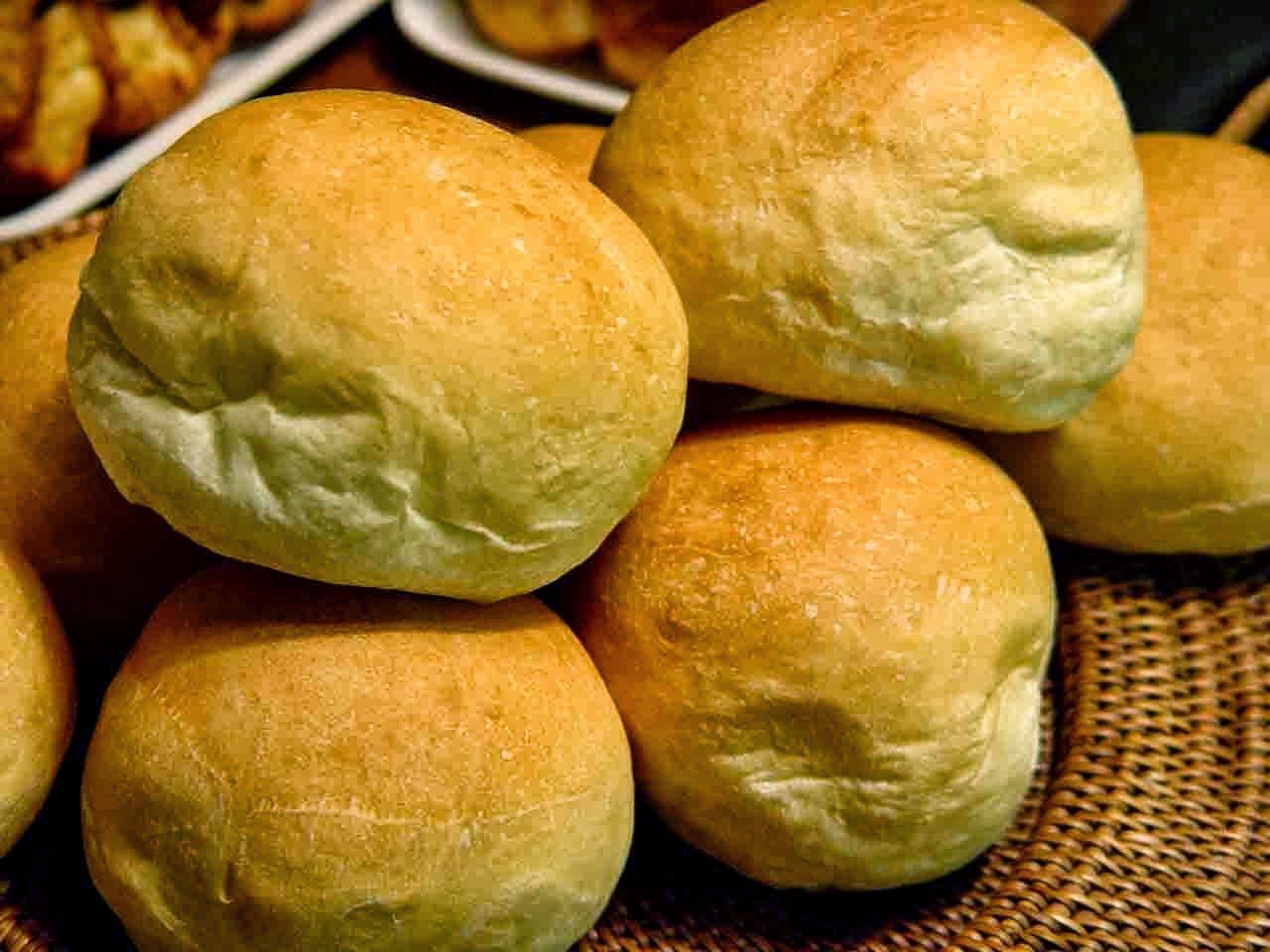
Basic White Bread Variations #BreadWorld
Cinnamon Bread:
Prepare dough, divide and roll out each half into a rectangle, as for Basic White Bread. Mix together ½ cup sugar, and 2 teaspoons cinnamon in small bowl. Spread each rectangle with 1 tablespoon softened butter or margarine. Sprinkle with half of sugar mixture. Finish rolling and shaping loaves. Place in well-greased 8.5x4.5x2.5-inch loaf pans. Cover. Let rise in warm place, free from draft, about 1 hour, or until doubled in bulk. If desired, brush tops with beaten egg white. Bake at 375F for 40 to 45 minutes, or until golden brown. Remove from pans immediately and cool on wire racks.
Yield 32 servings (16 slices per loaf)
Sixty-Minute Rolls:
Increase yeast to 3 packages and sugar to ¼ cup. Mix and knead dough as directed in Basic White Bread. Place in greased bowl, turning to grease top. Cover. Let rise in warm place, free from draft, about 15 minutes. Turn dough onto lightly floured surface. Shape as desired (curlicues, cloverleafs, etc.). Cover. Let rise in slightly warm oven (90F) about 15 minutes. Bake at 425F for 12 minutes or until golden brown. Remove from pans immediately and cool on wire racks.
a) Curlicues: Divide dough in half and roll each half to 12x9-inch rectangle. Cut 12 equal strips about 1-inch wide. Roll each strip tightly to form a coil, tucking ends underneath. Place on greased baking sheets about 2 inches apart.
b) Cloverleafs: Divide dough into 24 equal pieces. Form each piece into a ball and place in greased muffin pan. With scissors, cut each ball in half, then quarters.
Yield 24 servings (1 roll per serving)
 10 Top Tips For Baking The Perfect Loaf Of Bread #BreadWorld
It is incredibly satisfying to make your own bread at home and guests at dinner parties will be very impressed when you pass round a basket of home-made bread. There's nothing quite like the smell of baking bread or freshly baked bread so have a try, it's easier than you think.
First of all, you need to use the right ingredients:
Flour – Different flours are used for making different types of bread. Plain or all-purpose flour is generally used in baking cakes and biscuits but can be used in making quick breads and yeast breads. Strong bread-making flour is the flour usually used for making bread because its high gluten content makes a bread which rises well. Make sure that you knead dough made with strong flour for longer than doughs made with plain flour to help the gluten to work. Wholewheat bread flour can also be used and rye flour can be mixed with other flours.
Yeast – Yeast is the ingredient which makes the bread rise. It needs sugar and warmth to activate. As it “eats” the sugar it produces gases which make the dough stretch and rise. There are many different yeasts on the market including quick acting yeast which comes in powder or granules. Follow the instructions on the packet. Traditional yeast should be “proofed” to activate it, before mixing with the flour. To do this, dissolve it in warm water which is about 40-46 degrees C or 105-115 degrees F. Adding sugar can make the process quicker. Quick acting yeast can usually just be added straight to the flour.
Liquid – Water or milk, or a mixture of both, are used in bread making. Water makes a dense, crusty bread whereas milk makes a softer crusted, softer crumbed loaf.
Sugar – Sugar is needed to feed the yeast to make the dough stretch and rise. General guidelines are to use 2 teaspoons of sugar for every two cups of flour used. All types of sugar can be used in bread making.
Salt – Some salt helps to stop the bread rising too quickly but too much salt can stop the bread rising at all. Follow recipes carefully.
Butter – Gives a softer bread and gives the bread flavor. Using butter in bread making can also help the bread to keep for longer. Olive oil or margarine can also be used.
Eggs – Can be used in bread to give flavor and color.
Making the Bread
Here are some guidelines for making the perfect loaf:
1) Prepare the yeast – follow the instructions on the packet.
2) Mix the flour and sugar in a bowl.
3) Add a cup at a time of dry ingredients to the wet yeast mixture. Mix and slow to adding a spoonful at a time when mixture becomes smooth.
4) When the dough starts to come away from the sides of the bowl, you can stop adding flour. Form a ball shape and get ready to knead.
5) Knead the dough for about 10 minutes with well floured hands on a well floured surface. Knead the dough using the heel of your hand and by pushing it away from you, folding it back towards you, turning and repeating the process.
6) Leave dough to rise in a warm place in a bowl covered with cling film until doubled in size – 1 or 2 hours.
7) Punch – Punch the dough twice to deflate the dough slightly.
8) Shape the dough – shape the dough into the required shape.
9) Leave to rise again in a warm place until almost doubled in size. Preheat the oven while this is happening.
10) Glaze bread if required then bake according to the recipe and cool.
Enjoy your freshly baked bread while its warm with some butter and jam.
Follow Me @lachicafernandoinstagram